Robotic Cancer Surgery in Mumbai
Da Vinci Xi Precision at
Nanavati Max Hospital
What Is Robotic Cancer Surgery?
Robotic cancer surgery is a form of minimally invasive surgery where the surgeon controls a sophisticated robotic system — the Da Vinci Xi Surgical System — to perform complex cancer operations through small incisions. The surgeon sits at a console with enhanced 3D high-definition vision, while the robot’s wristed instruments translate hand movements into precise micro-movements inside the patient’s body.
Unlike conventional laparoscopic surgery, the robotic platform offers 10x magnification, 540-degree instrument articulation, and tremor filtration — enabling surgeons to operate in tight anatomical spaces with unprecedented precision. This is particularly valuable in cancer surgery where the goal is complete tumour removal while preserving surrounding healthy tissue and critical structures.
The Da Vinci Xi System at Nanavati Max Hospital
Nanavati Max Super Speciality Hospital is equipped with the latest and most advanced Da Vinci Xi Surgical System — the fourth generation of Intuitive Surgical’s robotic platform. This system features multi-quadrant access (allowing the surgeon to reach different areas of the body during the same procedure), laser targeting for precise instrument placement, and integrated fluorescence imaging with Firefly technology for real-time visualisation of blood vessels and tissue perfusion.
The oncology operation suites at Nanavati Max are state-of-the-art, featuring 4K laparoscopic systems with ICG (Indocyanine Green) fluorescence imaging, 12 modular operation theatres with advanced HEPA air-filtration systems, and dedicated robotic surgery suites designed for seamless integration of the Da Vinci system.
Cancer Types Treated with Robotic Surgery by Dr. Nagarajan
Robotic Colorectal Cancer Surgery
Dr. Nagarajan performs the majority of colorectal cancer surgeries using the robotic approach. This includes right hemicolectomy, left hemicolectomy, anterior resection, low anterior resection for rectal cancer, and abdominoperineal resection. Robotic surgery is particularly advantageous for rectal cancer, where the narrow pelvic space makes open surgery challenging. The robotic arms provide superior access and visualisation, allowing for precise dissection around the mesorectum and preservation of nerve bundles that control bladder and sexual function.
Robotic Pancreatic Surgery
Distal pancreatectomy and subtotal pancreatectomy for tumours in the body or tail of the pancreas are routinely performed using robotic techniques. This minimally invasive approach reduces hospital stay and enables faster recovery while maintaining oncological adequacy.
Robotic Liver Surgery
Selected liver resections — including segmentectomies and wedge resections for smaller lesions — are performed laparoscopically or robotically when tumour location and patient factors are favourable. The Da Vinci system’s precision is particularly valuable for parenchyma-sparing liver surgery.
Robotic Gastric and Oesophageal Cancer Surgery
For eligible patients with gastric or gastro-oesophageal junction tumours, robotic-assisted gastrectomy offers the benefits of minimally invasive surgery with complete lymph node dissection.
Benefits of Robotic Cancer Surgery
Smaller incisions (typically 8mm ports) resulting in significantly less post-operative pain. Reduced blood loss compared to open surgery. Shorter hospital stay — most patients are discharged 2-4 days earlier than after open procedures. Faster return to normal activities and work. Superior cosmetic outcomes with minimal scarring. Lower risk of surgical site infections. Enhanced surgeon precision in complex anatomical areas, particularly the pelvis and retroperitoneum.
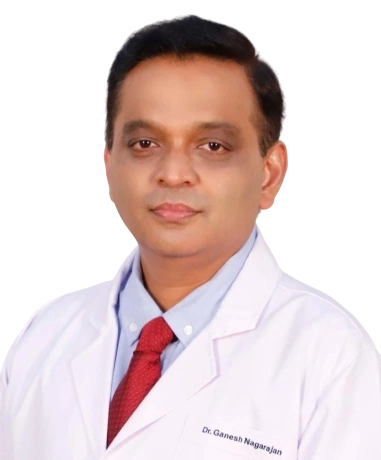
Dr. Ganesh Nagarajan — Robotic Cancer Surgery Expertise
Expert Oncologist Surgeon | Cancer Specialist
Dr. Ganesh Nagarajan is a certified robotic surgeon and a key member of Nanavati Max’s Centre for Robotic Surgery and Robotic Oncology Surgery Program. Having trained at institutions at the forefront of minimally invasive oncology — including Tata Memorial Hospital (India’s premier cancer centre) and Hospital Beaujon in Paris — he brings a global perspective to robotic cancer care.
His approach follows a clear principle: robotic surgery is offered when it provides a genuine clinical advantage to the patient without compromising cancer outcomes. For patients where open surgery provides a better oncological result, he will recommend the open approach. The decision is always guided by what is good for the patient, not by the technology itself.


Am I a Candidate for Robotic Cancer Surgery?
Not every cancer patient is a candidate for robotic surgery. The decision depends on tumour type, location, and stage; previous surgical history; overall health and fitness for minimally invasive surgery; and the specific anatomical considerations of each case.
During your consultation, Dr. Nagarajan will review your imaging (CT, MRI, PET-CT), pathology reports, and overall health to determine whether robotic surgery is the optimal approach for your specific situation. For many patients with colorectal cancer, and selected patients with pancreatic, liver, and gastric cancers, robotic surgery offers significant advantages.
Robotic Cancer Surgery at Cancer Surgery Clinic
Robotic surgery case by Dr. Ganesh Nagarajan
Patient recovery after robotic surgery
Understanding robotic cancer surgery

Book an Appointment
Related Blogs
What to Expect When Coming to Mumbai for Cancer Surgery — Your Complete Guide
About Nanavati Max Super Speciality Hospital Nanavati Max has been serving patients for over 75 years and is one of Mumbai's most trusted...
Your Cancer Treatment Journey — From First Contact to Recovery
Step 1: Initial Contact and Virtual Consultation Your journey begins with a simple step: sharing your medical reports with our team. You can...
Why Travel to Mumbai for Cancer Surgery — Facilities, Outcomes, and Cost Advantages
Mumbai: India's Cancer Surgery Capital Mumbai is home to India's most prestigious cancer treatment institutions, including Tata Memorial Hospital (a...
Related FAQ’s
Is robotic surgery safe for cancer?
Yes. Numerous international studies confirm that robotic surgery achieves equivalent or superior oncological outcomes compared to open surgery for appropriate cases, with the added benefits of reduced invasiveness.
How long does robotic cancer surgery take?
Duration varies by procedure. A robotic colectomy typically takes 2-3 hours. A robotic distal pancreatectomy may take 3-4 hours. Dr. Nagarajan’s high volume of cases ensures efficiency without compromising thoroughness.
Will I need chemotherapy after robotic surgery?
Adjuvant (post-surgery) chemotherapy may be recommended based on the final pathology report, cancer stage, and lymph node involvement. This is decided by the multidisciplinary tumour board.
Does insurance cover robotic cancer surgery?
Most major insurance providers and TPA networks cover robotic surgery at Nanavati Max Hospital. The hospital’s insurance desk can assist with pre-authorisation.
Ready to discuss your treatment options? Dr. Ganesh Nagarajan is available for virtual consultations via WhatsApp video call or the hospital’s telemedicine platform.
Call +91 7304663828 | WhatsApp +91 7700058024 | Book Video Consultation